AnswerMaterials
What retraction settings should you use for ABS and ASA?
Your printer's own: shipped ABS and ASA profiles use 0.7 to 0.8 mm on direct-drive Prusa and Bambu printers (0.4 mm for Bambu ABS) and 2.5 to 6.5 mm on Bowden.
Which filament does what, with the temperatures, strengths and limits taken from manufacturer data sheets.
AnswerMaterials
Your printer's own: shipped ABS and ASA profiles use 0.7 to 0.8 mm on direct-drive Prusa and Bambu printers (0.4 mm for Bambu ABS) and 2.5 to 6.5 mm on Bowden.
AnswerMaterials
Shipped PETG profiles retract 0.4 to 1 mm at 30 to 45 mm/s on direct-drive printers and 2.5 to 8 mm on Bowden printers, close to each printer's PLA values.
AnswerMaterials
Shipped PLA profiles retract 0.4 to 0.8 mm at 30 to 50 mm/s on direct-drive printers and 2.5 to 6.5 mm at 45 to 70 mm/s on Bowden printers.
AnswerMaterials
Start from your slicer's TPU profile: 0.4 mm on Bambu Lab X1 Carbon, P1S and A1, 2.5 mm on Prusa MK4S and CORE One, off on the MK3S, 3 to 8 mm on Bowden printers.
AnswerMaterials
Not vulcanized rubber, which never melts. Filament printers print rubber-like TPU and TPE in 60A to 95A Shore grades, spanning Parker's 70A to 80A O-ring range.
AnswerMaterials
No. Data sheets list PLA, PETG, ABS, ASA, nylon and TPU as insoluble in water. Only PVA and BVOH support filaments dissolve, in a few hours to overnight.
AnswerMaterials
A closed print with sparse infill usually floats. Solid PLA (1.24 g/cm³), PETG, ABS and nylon sink in water (1.00 g/cm³); polypropylene (0.9 g/cm³) floats.
AnswerMaterials
PLA holds cold water: Prusa's PLA pots showed no leaks and its boxes stayed dry at 20 m. It softens above 60 °C, and Prusa does not recommend prints as food containers.
AnswerMaterials
Brush a cured coat of XTC-3D epoxy over the cavity, then the release agent your casting maker names. Test platinum silicone on a sealed scrap: it can stay tacky.
AnswerMaterials
Coat it in an epoxy its maker rates safe near reptiles and cure it fully. Bearded dragons bask at up to 42 °C (108 °F) and PLA softens at 57 °C: use PETG or ASA there.
AnswerMaterials
UV printer resin brushed on hardens only where 405 nm light or sunlight lands, and no maker documents it as a sealant. Uncured, it carries H317 (skin allergy).
AnswerMaterials
Yes for seams and joints, not as a coat: silicone sealant is not paintable, goes on at least 1/8 in (3.2 mm) thick and is water ready in 30 minutes to 12 hours.
AnswerMaterials
Let the paint dry (72 hours to two weeks for Liquitex acrylics), then brush or spray two or three thin clear coats. Keep to each maker's recoat time.
AnswerMaterials
Mostly no. Run ABS with the part fan off or low: PrusaSlicer's Generic ABS keeps it off, Bambu ABS runs 10%, and both raise it for bridges and fast layers.
AnswerMaterials
A moderate fan, about 20 to 60%, not PLA's 100%. Prusa's PETG profile runs 30 to 50%, Bambu's 20 to 40%; both keep it off for 3 layers, more for bridges.
AnswerMaterials
Run PLA's part cooling fan at 100%, off on the first layer for bed adhesion. Prusament's data sheet says 100%; some printer profiles start at 50 to 85% and ramp up.
AnswerMaterials
Shipped PLA profiles use 0.02 to 0.05 on direct-drive printers with a 0.4 mm nozzle (0.036 on a Prusa Core One) and 0.2 to 0.27 on a Bowden Prusa MINI.
AnswerMaterials
Dry ABS and ASA at 80 °C (176 °F): 8 hours on Bambu Lab's data sheets, 4 hours for Prusament ASA. Polymaker uses 70 °C for 6 to 7 hours.

AnswerMaterials
Mostly no: at the maker's temperature, no maker names harm from extra hours for PLA or PETG. Heat above it fuses coils; nylon and PC can turn brittle.
AnswerMaterials
Usually not from an intact vacuum bag. Dry PETG once an opened spool has sat out or pops: Bambu Lab's line is 72 hours in air above 50% RH.
AnswerMaterials
Not from a sealed bag. Dry PLA once an opened spool has sat in room air or it pops and strings: Bambu Lab says 55% RH air re-wets filament in 2 to 12 hours.
AnswerMaterials
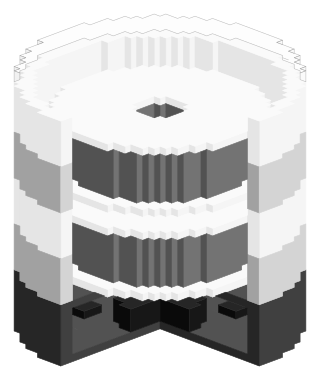
Yes for PLA, PETG and TPU: Nesco, COSORI and Presto dehydrators reach 71 to 74 °C. Not for nylon or PC, which need 75 to 90 °C. Lift the trays out to fit the spool.
AnswerMaterials
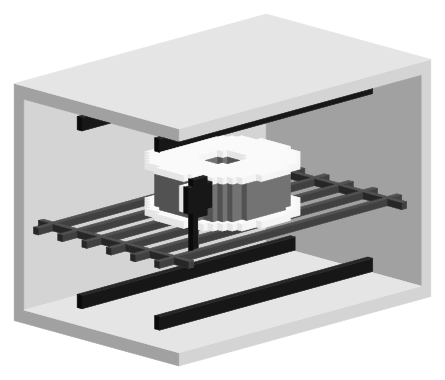
Only if the oven holds the drying temperature. GE's Warm mode bakes at 170 °F (77 °C), past PLA's 60 °C glass transition. Bambu Lab says no; Prusa allows one.
AnswerMaterials
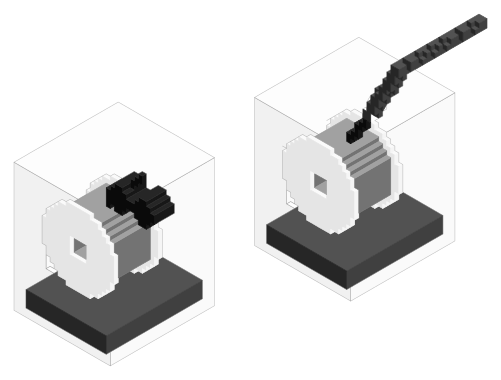
Yes, on dryers built for it. Bambu Lab's AMS 2 Pro and AMS HT drop to 45 °C with PLA and 55 °C with PETG once a print starts; standalone dryers hold their setting.
AnswerMaterials
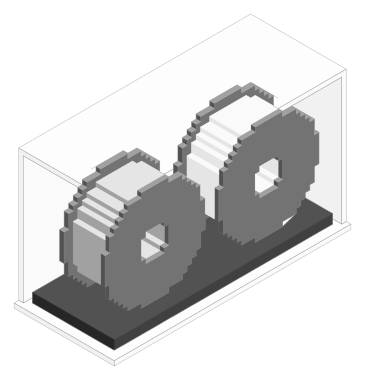
Yes, at the PLA's setting only. Makers dry PLA at 45 to 55 °C and PETG at 55 to 65 °C, so the ranges meet only at 55 °C, Prusa's 6-hour PETG setting.
AnswerMaterials
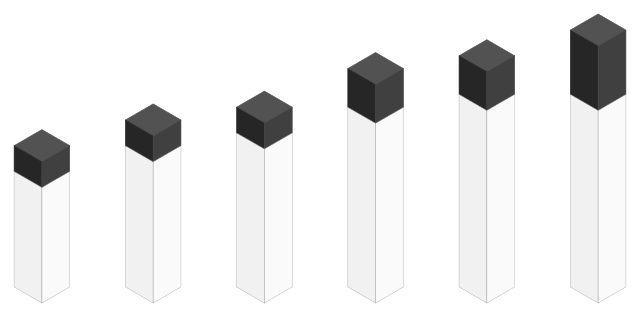
Dry PLA at 45 to 55 °C, PETG at 55 to 65 °C, TPU at 60 to 70 °C and nylon at 75 to 100 °C, for 4 to 12 hours, per Bambu Lab, Prusa and Polymaker.
AnswerMaterials
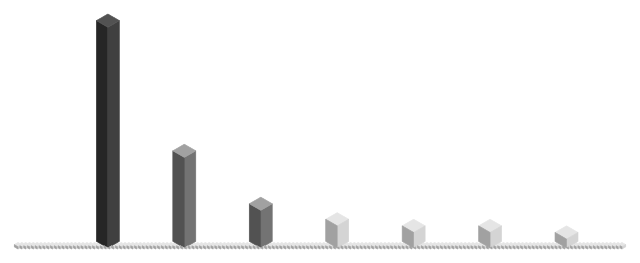
PVA and PA6 nylon absorb the most: 6.25% and 2.35 to 2.56% at saturation on Bambu Lab's data sheets, against 0.43% for PLA and 0.25% for PC.
AnswerMaterials
Heat the spool below its softening point, then seal it with desiccant. Bambu Lab's oven setting is 50 °C for PLA and 60 to 65 °C for PETG, for 8 hours.
AnswerMaterials
Most nylon sheets say 6 to 12 hours at 80 to 100 °C: Bambu Lab PA6-CF 80 °C for 8 to 12 h, Polymaker Fiberon 100 °C for 10 h, Prusament PA11 CF 90 °C for 6 h.

AnswerMaterials
Dry PETG at 55 to 65 °C (131 to 149 °F) for 6 to 8 hours. Prusa sets 55 °C, Bambu Lab 65 °C, Polymaker 60 to 65 °C. None of them goes above 65 °C.
AnswerMaterials
Dry PLA at 45 to 55 °C (113 to 131 °F) for 6 to 8 hours. Bambu Lab sets 50 °C for 8 hours, Polymaker 55 °C for 6, Prusa 45 °C for 6. Silk and PLA-CF take 55 °C.
AnswerMaterials
Seal it in an airtight bag or box with desiccant below 20% RH, Bambu Lab's target for PLA, PETG, TPU, PC and nylon. Room air can re-wet it in 2 to 12 hours.

AnswerMaterials
Dry TPU at 70 °C for 8 hours, per Bambu Lab and Polymaker data sheets. Prusa dries Prusament TPU 95A at 60 °C for 4 hours. Bambu's TPU spools take 90 °C.
AnswerMaterials
Yes: printing from wet filament cost polycarbonate up to 30% of its strength along the lines and 70% across them, ABS 25% and PA6 nylon 43%. PLA held a week at 65% RH.
AnswerMaterials
Use 90 to 100 °C for ABS: Bambu Lab's range on PEI and Engineering plates. Prusa defaults to 100 °C, and the Bambu Lab P1S bed tops out at 100 °C.
AnswerMaterials
Set the bed to 100 °C for ASA, Bambu Studio's default. Data sheets run from 75 °C (Polymaker) to 110 °C (Prusa), always with glue and an enclosure.
AnswerMaterials
Bambu Lab sets PLA at 45 to 65 °C on PEI, PETG 60 to 80 °C, ABS and ASA 90 to 100 °C, PC and nylon 100 to 120 °C. Fiber-filled grades match their base plastic.
AnswerMaterials
Prusa's tests found PLA works best for a cold pull, at 85 to 100 °C. Bambu Lab adds PETG for high-flow nozzles; Creality favors nylon at 140 to 160 °C.
AnswerMaterials
Bambu Lab's heated-bed drying table sets 60 to 70 °C for PLA, 75 to 85 °C for PETG and 80 to 90 °C for TPU, for 12 hours, spool covered and printer closed.
AnswerMaterials
Take the bed range from the data sheet's recommended print settings, for your plate (Prusament PLA: 40 to 60 °C). Raise 5 to 10 °C if the first layer won't stick.
AnswerMaterials
Bambu Lab sets 80 to 100 °C for its nylons on a glued PEI or Engineering plate, Prusa 110 °C on a PA Nylon sheet. Polymaker's nylons run at 25 to 50 °C.
AnswerMaterials
About 70 to 80 °C. Bambu Lab lists 60 to 80 °C for all its PETG, Prusa runs 85 then 90 °C. Put glue stick on smooth PEI or glass first.
AnswerMaterials
Use 55 to 60 °C on smooth or textured PEI and 35 °C on a Bambu Cool Plate. Maker guidance spans 25 to 65 °C across Basic, Matte, Silk, PLA+ and PLA-CF.
AnswerMaterials
Polycarbonate needs a 90 to 120 °C bed. Bambu Lab lists 90 to 110 °C, Polymaker 90 to 105 °C and Prusament PC Blend 110 ± 10 °C; PC-ABS takes 90 to 105 °C.
AnswerMaterials
30 to 45 °C covers most TPU. Bambu Lab lists 30 to 35 °C for its 85A, 90A, 95A HF and 68D grades; Polymaker allows 25 to 60 °C and Prusa 60 to 75 °C.
AnswerMaterials
Yes: Bambu Lab says damp nylon, PC and fiber-filled filament are prone to clogging. Wet PLA mostly bubbles and strings. Dry PLA at 45 to 55 °C for 6 to 8 hours.
AnswerMaterials
It keeps the first layers stuck and stops them shrinking off the plate. Polymaker sets it just under the glass transition: PLA at 25 to 60 °C against a 61 °C Tg.
AnswerMaterials
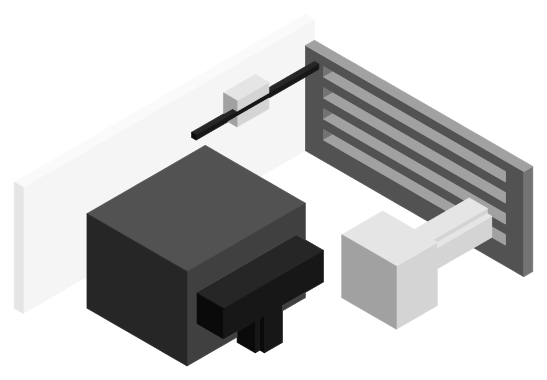
Not internal engine parts. Suppliers rate the engine area at 125 °C (257 °F) and on-engine parts at 150 °C, above the HDT of PETG, ABS, ASA and PC filament.
AnswerMaterials
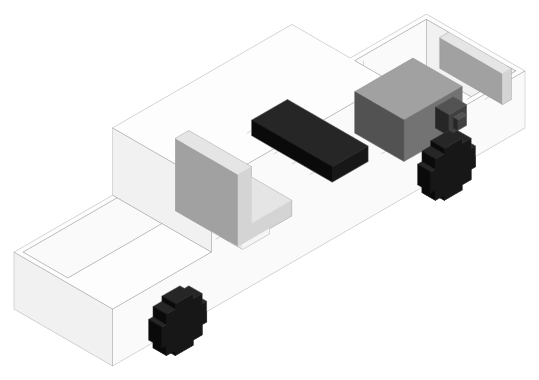
A sunlit dashboard averaged 157 °F (69 °C), so dash parts need ABS, ASA or PC. Shaded cabin parts take PETG, exterior parts ASA, flexible parts TPU.
AnswerMaterials
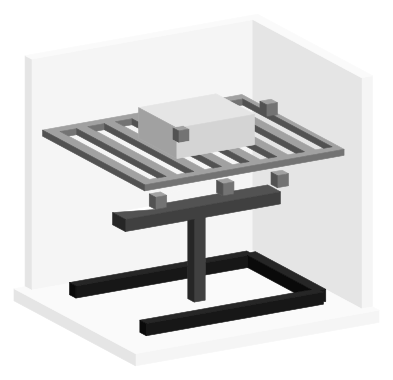
Manufacturer HDT and Tg figures for PLA, PETG, ABS, ASA, nylon, PC and PP set against the 150 °F dishwasher sanitize rinse, with margins in °C.
AnswerMaterials
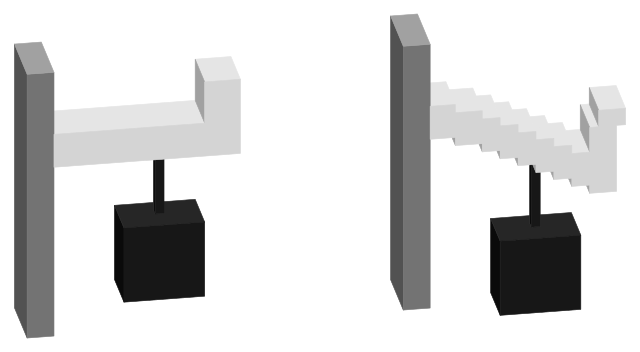
PLA showed no strength loss after a year at 25 °C, but 24 h of lab UV-B cut clear PETG's strength 36% and a hot soak halved carbon-fiber nylon's.
AnswerMaterials
Coat the print in a sealant its maker calls fish safe once cured, such as Pond Armor Pond Shield (24 hours to cure), and use natural PLA or PETG with no added color.
AnswerMaterials
Iron temperature per material for heat-set inserts: about 225 °C for PLA, 245 °C for PETG and 265 °C for ABS, from CNC Kitchen's printing temperature plus 10 to 20 °C.
AnswerMaterials
Not reliably: UltiMaker advises against heat-set inserts in flexible TPU because the plastic deforms and the insert loosens. What to use instead, and how to test.
AnswerMaterials
PLA showed no mass or strength loss after a year in 25 °C water in two lab studies. At 50 °C, PLA coupons lost all tensile strength within 57 days.
AnswerMaterials
Yes, if the layers don't crack: ABS held water with 2 perimeters in Prusa's tests, half what PLA needed. Acetone vapor smooths ABS and ASA, but test it for leaks.
AnswerMaterials
A nylon print holds water with 4 perimeters, but the plastic absorbs it: 2.35% for Bambu Lab PA6-CF vs 0.43% for PLA, and soaked PA6-CF can lose half its strength.
AnswerMaterials
PETG is insoluble and takes up 0.45% water at saturation, about the same as PLA. Prints leak at the seams: Prusa needed 4 perimeters before PETG held water.
AnswerMaterials
PLA plastic is: insoluble, 0.43 percent water uptake. A PLA print often leaks at the seam until it has 4 perimeters, more flow, or a coat of epoxy or lacquer.
AnswerMaterials
Yes, if printed well: TPU absorbs 0.18 to 1.08 percent water, and calibrated TPU walls held water 15 days in a 2023 test. Polyester TPU degrades in hot water.
AnswerMaterials
Brush-on epoxy step by step from the XTC-3D data sheet, Prusa's results for epoxy, lacquer, chemical smoothing and nail polish, and the food-contact rules.
AnswerMaterials
Yes, for parts without water pressure: Prusa sprays acrylic varnish inside and out a few times. Flex Seal needs 24 to 48 hours to cure and is not for drinking water.
AnswerMaterials
Bambu Lab lists a 45 to 60 °C chamber for ABS and uses 60 °C for large, warp-prone parts, well below the 101 °C glass transition on Polymaker's data sheet.
AnswerMaterials
A decision table from what the broken part faces (heat, sun, load, chemicals) to a material class, with HDT, impact and absorption figures from manufacturer data sheets.
AnswerMaterials
What Prusa Research, FDA 21 CFR 177.1630 and EU Regulation 10/2011 say about printed parts that touch food: layer grooves, nozzle lead, uncertified pigments and coatings.
AnswerMaterials
Nylon data sheets put the nozzle at 250 to 300 °C: copolymers start lowest, PA6, PA12 and fiber-filled grades run 260 to 290 °C. Ranges, beds and drying by type.
AnswerMaterials
Azimi et al. measured ABS emitting hundreds of times more ultrafine particles than PLA, plus styrene. What the studies found and the ventilation they advise.

AnswerMaterials
PLA, PETG, ASA, PP and PC compared for holding water: the perimeter count Prusa needed, data-sheet water absorption, heat limits and outdoor use.