AnswerMaterials
What retraction settings should you use for ABS and ASA?
Your printer's own: shipped ABS and ASA profiles use 0.7 to 0.8 mm on direct-drive Prusa and Bambu printers (0.4 mm for Bambu ABS) and 2.5 to 6.5 mm on Bowden.
AnswerMaterials
Your printer's own: shipped ABS and ASA profiles use 0.7 to 0.8 mm on direct-drive Prusa and Bambu printers (0.4 mm for Bambu ABS) and 2.5 to 6.5 mm on Bowden.
AnswerMaterials
Mostly no. Run ABS with the part fan off or low: PrusaSlicer's Generic ABS keeps it off, Bambu ABS runs 10%, and both raise it for bridges and fast layers.
AnswerHardware
Yes for ABS, ASA, PC and nylon: profiles run the part fan off or at 10 to 20% on long layers. PLA needs it for bridges and overhangs. Never turn off the hotend fan.
AnswerMaterials
Dry ABS and ASA at 80 °C (176 °F): 8 hours on Bambu Lab's data sheets, 4 hours for Prusament ASA. Polymaker uses 70 °C for 6 to 7 hours.
AnswerMaterials
Use 90 to 100 °C for ABS: Bambu Lab's range on PEI and Engineering plates. Prusa defaults to 100 °C, and the Bambu Lab P1S bed tops out at 100 °C.
AnswerTroubleshooting
Pull PLA at 70 to 100 °C after heating to 200 to 270 °C. UltiMaker pulls ABS and cleaning filament at 140 to 160 °C; Creality gives 120 °C for PETG.
AnswerTroubleshooting
Most slicer defaults use one bed temperature for all layers. PrusaSlicer starts PETG at 85 °C then 90 °C; OrcaSlicer starts ABS at 105 °C then 100 °C.
AnswerHardware
Consumer heated beds top out at 80 to 120 °C: Bambu A1 mini 80 °C, P1S 100 °C, X1C 110 °C, Ender-3 110 °C, and H2D, Prusa MK4S and CORE One+ 120 °C.
AnswerTroubleshooting
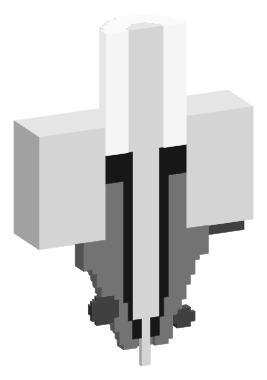
Burnt plastic from filament left in a hot nozzle. Marlin's optional idle timeout cuts the heater after 5 minutes; Prusa brushes the outside at 250 °C.
AnswerTroubleshooting
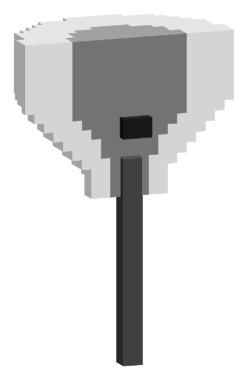
A 0.3 to 0.35 mm needle, the size Prusa Research bundles, pushed 1 to 2 cm up from below with the nozzle hot. It must be thinner than the 0.4 mm bore.
AnswerTroubleshooting
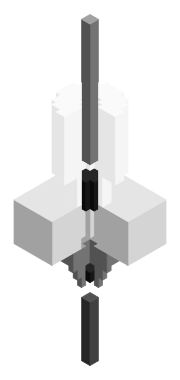
Heat the nozzle to 260 °C for PLA or 280 °C for PETG and push filament through, then use a 0.3 to 0.35 mm needle, a cold pull, and finally a nozzle swap.
AnswerHardware
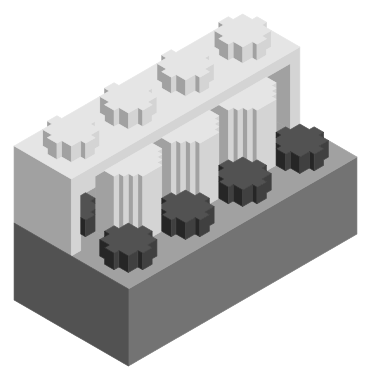
Yes, for personal use. The brick patent expired in 1978, but LEGO molds to 1/200 mm and Prusa quotes 0.3 mm XY, so tune XY compensation on a test brick first.
AnswerMaterials
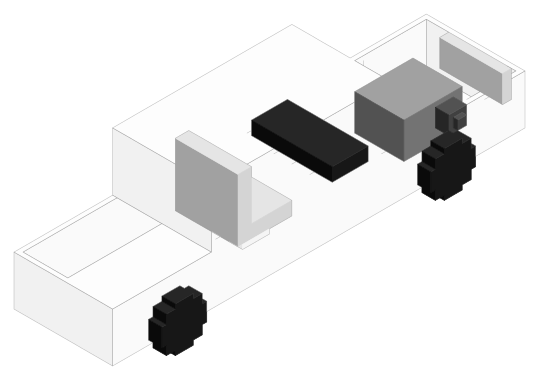
A sunlit dashboard averaged 157 °F (69 °C), so dash parts need ABS, ASA or PC. Shaded cabin parts take PETG, exterior parts ASA, flexible parts TPU.
AnswerMaterials
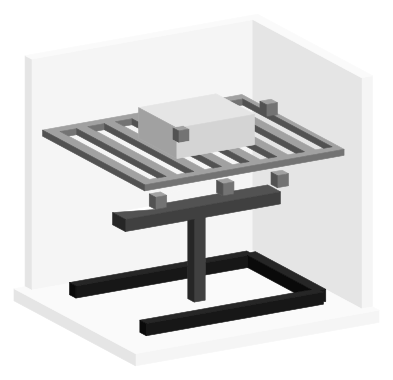
Manufacturer HDT and Tg figures for PLA, PETG, ABS, ASA, nylon, PC and PP set against the 150 °F dishwasher sanitize rinse, with margins in °C.
AnswerMaterials
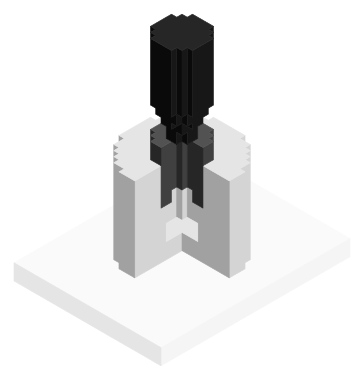
Iron temperature per material for heat-set inserts: about 225 °C for PLA, 245 °C for PETG and 265 °C for ABS, from CNC Kitchen's printing temperature plus 10 to 20 °C.
AnswerMaterials
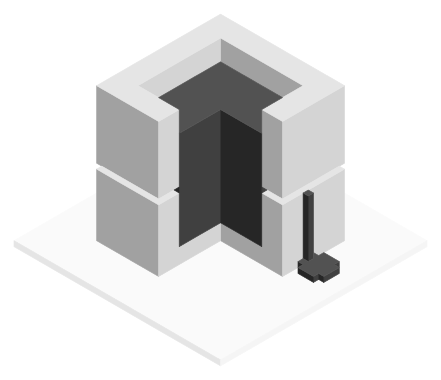
Yes, if the layers don't crack: ABS held water with 2 perimeters in Prusa's tests, half what PLA needed. Acetone vapor smooths ABS and ASA, but test it for leaks.
AnswerHardware
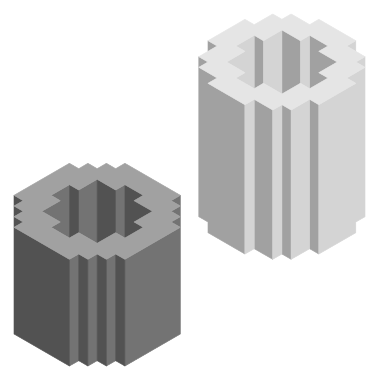
Voron printers use M3 heat-set inserts 5 mm across and 4 mm long (M3x5x4): the hole they need, how many each build takes, and the iron temperature for ABS and ASA.
AnswerTroubleshooting
Bambu Lab and Creality rate their printers for 10 to 30 °C ambient, and Prusa calls 20 to 30 °C ideal. What fails in a cold garage, and how to check yours.
AnswerMaterials
Bambu Lab lists a 45 to 60 °C chamber for ABS and uses 60 °C for large, warp-prone parts, well below the 101 °C glass transition on Polymaker's data sheet.
AnswerHardware
Not for PLA, PETG or TPU. Prusa requires a glue stick for ABS, ASA, nylon and PC Blend on textured PEI, and Bambu Lab says those four may need one.
AnswerMaterials
Azimi et al. measured ABS emitting hundreds of times more ultrafine particles than PLA, plus styrene. What the studies found and the ventilation they advise.