AnswerTroubleshooting
Why do my supports keep falling over?
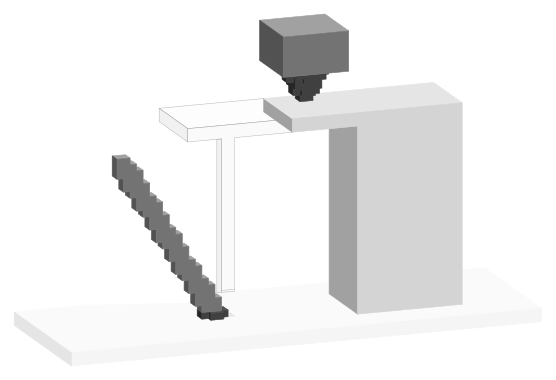
Tall, thin supports on a small foot get knocked loose. Widen the first layer (OrcaSlicer 2 mm, PrusaSlicer 3 mm by default), thicken branches, turn on Z hop.
AnswerTroubleshooting
Tall, thin supports on a small foot get knocked loose. Widen the first layer (OrcaSlicer 2 mm, PrusaSlicer 3 mm by default), thicken branches, turn on Z hop.
AnswerMaterials
Use 90 to 100 °C for ABS: Bambu Lab's range on PEI and Engineering plates. Prusa defaults to 100 °C, and the Bambu Lab P1S bed tops out at 100 °C.
AnswerMaterials
Set the bed to 100 °C for ASA, Bambu Studio's default. Data sheets run from 75 °C (Polymaker) to 110 °C (Prusa), always with glue and an enclosure.
AnswerHardware
Usually not. Prusa puts its steel sheet about 5 to 10 °C below the heatbed sensor, and a thermal camera read 56 °C on a Prusa i3 MK3 bed set to 60 °C.
AnswerTroubleshooting
Yes, up to a point: Prusa adds 5 to 10 °C when a material won't stick, but makers stop near the glass transition, 61 °C for PLA and 81 °C for PETG.
AnswerMaterials
Bambu Lab sets PLA at 45 to 65 °C on PEI, PETG 60 to 80 °C, ABS and ASA 90 to 100 °C, PC and nylon 100 to 120 °C. Fiber-filled grades match their base plastic.
AnswerTroubleshooting
Let it cool: Prusa waits for room temperature and Bambu Lab for 35 °C or lower on textured PEI. On Bambu's SuperTack plate, reheat a stuck print to about 50 °C.
AnswerTroubleshooting
The first layers stay soft and squash out into elephant foot; Polymaker caps PLA at 60 °C. Too hot also clogs nozzles and bonds PETG hard enough to tear PEI.
AnswerTroubleshooting
Yes. In a 2021 ABS test, corner lift was lowest at a 90 °C bed, 0.89 mm, and grew both cooler and hotter: 1.65 mm at 80 °C, 1.37 mm at 100 °C.
AnswerHardware
No. Prusa says PLA does not require a heated bed, and Polymaker and Overture start their bed range at 25 °C. Prusa still recommends a 60 °C bed.
AnswerMaterials
Take the bed range from the data sheet's recommended print settings, for your plate (Prusament PLA: 40 to 60 °C). Raise 5 to 10 °C if the first layer won't stick.
AnswerTroubleshooting
Most slicer defaults use one bed temperature for all layers. PrusaSlicer starts PETG at 85 °C then 90 °C; OrcaSlicer starts ABS at 105 °C then 100 °C.
AnswerMaterials
Bambu Lab sets 80 to 100 °C for its nylons on a glued PEI or Engineering plate, Prusa 110 °C on a PA Nylon sheet. Polymaker's nylons run at 25 to 50 °C.
AnswerMaterials
About 70 to 80 °C. Bambu Lab lists 60 to 80 °C for all its PETG, Prusa runs 85 then 90 °C. Put glue stick on smooth PEI or glass first.
AnswerMaterials
Use 55 to 60 °C on smooth or textured PEI and 35 °C on a Bambu Cool Plate. Maker guidance spans 25 to 65 °C across Basic, Matte, Silk, PLA+ and PLA-CF.
AnswerMaterials
Polycarbonate needs a 90 to 120 °C bed. Bambu Lab lists 90 to 110 °C, Polymaker 90 to 105 °C and Prusament PC Blend 110 ± 10 °C; PC-ABS takes 90 to 105 °C.
AnswerMaterials
30 to 45 °C covers most TPU. Bambu Lab lists 30 to 35 °C for its 85A, 90A, 95A HF and 68D grades; Polymaker allows 25 to 60 °C and Prusa 60 to 75 °C.
AnswerMaterials
It keeps the first layers stuck and stops them shrinking off the plate. Polymaker sets it just under the glass transition: PLA at 25 to 60 °C against a 61 °C Tg.
AnswerHardware
Not for PLA, PETG or TPU. Prusa requires a glue stick for ABS, ASA, nylon and PC Blend on textured PEI, and Bambu Lab says those four may need one.
AnswerHardware
Wash it when prints stop sticking, not on a schedule. Prusa wipes with about 90% IPA and saves soap for a last resort; neither maker allows acetone on textured PEI.
AnswerTroubleshooting
One lifted corner has less grip or more cooling than the other three. Five causes to check: bed height, a draft, a cool bed zone, skin oil and a sharp corner.
AnswerTroubleshooting
TPU welds itself to a hot bed, a squashed first layer or bare smooth PEI. Bambu Lab lists 35 to 45 °C on PEI plates. The causes, the fixes and a safe way to peel it.