AnswerMaterials
Can you dry filament for too long?
Mostly no: at the maker's temperature, no maker names harm from extra hours for PLA or PETG. Heat above it fuses coils; nylon and PC can turn brittle.
AnswerMaterials
Mostly no: at the maker's temperature, no maker names harm from extra hours for PLA or PETG. Heat above it fuses coils; nylon and PC can turn brittle.
AnswerMaterials
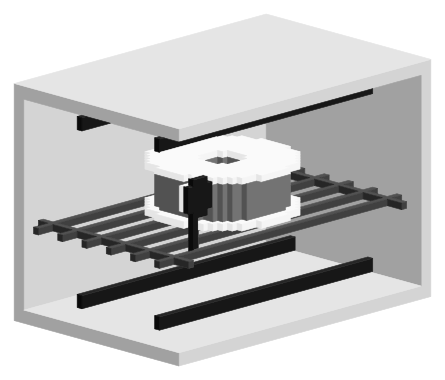
Only if the oven holds the drying temperature. GE's Warm mode bakes at 170 °F (77 °C), past PLA's 60 °C glass transition. Bambu Lab says no; Prusa allows one.
AnswerMaterials
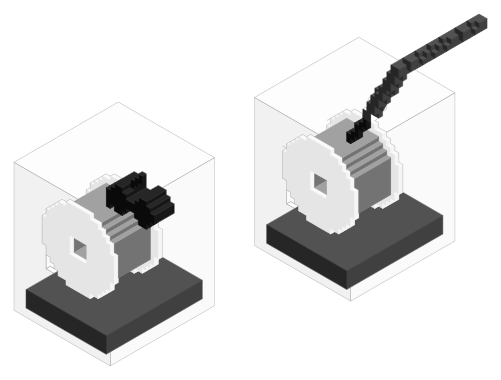
Yes, on dryers built for it. Bambu Lab's AMS 2 Pro and AMS HT drop to 45 °C with PLA and 55 °C with PETG once a print starts; standalone dryers hold their setting.
AnswerMaterials
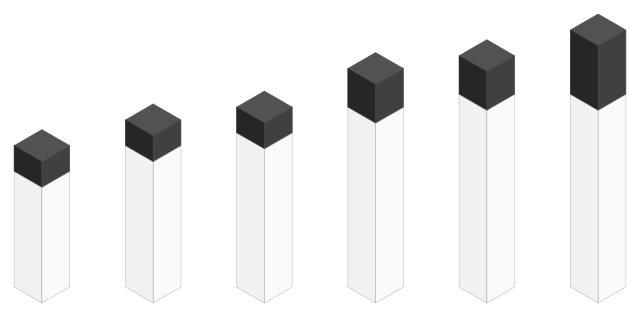
Dry PLA at 45 to 55 °C, PETG at 55 to 65 °C, TPU at 60 to 70 °C and nylon at 75 to 100 °C, for 4 to 12 hours, per Bambu Lab, Prusa and Polymaker.
AnswerMaterials
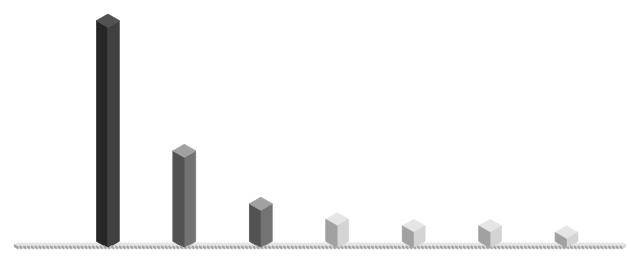
PVA and PA6 nylon absorb the most: 6.25% and 2.35 to 2.56% at saturation on Bambu Lab's data sheets, against 0.43% for PLA and 0.25% for PC.
AnswerMaterials
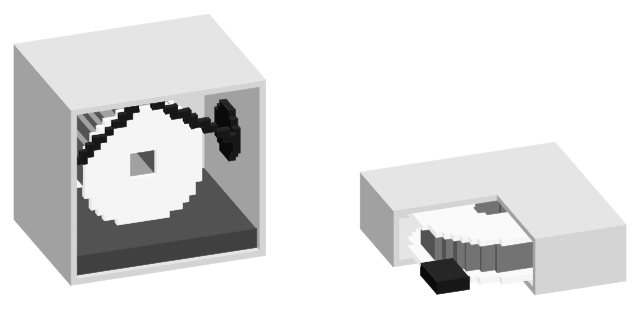
Heat the spool below its softening point, then seal it with desiccant. Bambu Lab's oven setting is 50 °C for PLA and 60 to 65 °C for PETG, for 8 hours.
AnswerTroubleshooting
Wet filament pops or hisses at the nozzle, bubbles, strings and prints rough. To confirm, dry it (PLA 50 °C, PETG 60 to 65 °C, 8 hours) and reprint.
AnswerMaterials
Most nylon sheets say 6 to 12 hours at 80 to 100 °C: Bambu Lab PA6-CF 80 °C for 8 to 12 h, Polymaker Fiberon 100 °C for 10 h, Prusament PA11 CF 90 °C for 6 h.
AnswerMaterials
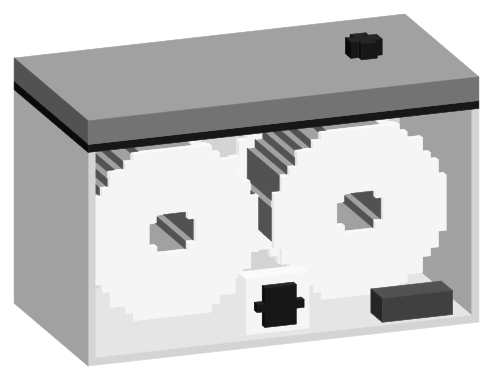
Seal it in an airtight bag or box with desiccant below 20% RH, Bambu Lab's target for PLA, PETG, TPU, PC and nylon. Room air can re-wet it in 2 to 12 hours.
AnswerMaterials
Yes: printing from wet filament cost polycarbonate up to 30% of its strength along the lines and 70% across them, ABS 25% and PA6 nylon 43%. PLA held a week at 65% RH.
AnswerTroubleshooting
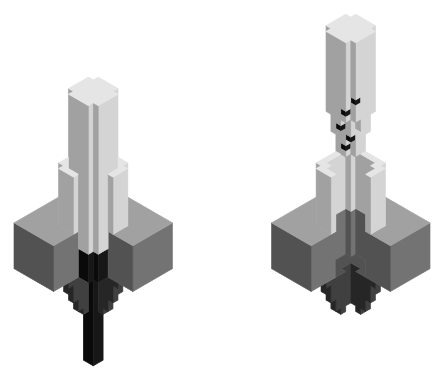
Neither: they do different jobs. Cleaning filament such as eSUN eClean flushes old material at 160 to 300 °C; a cold pull drags debris out at 80 to 160 °C.
AnswerMaterials
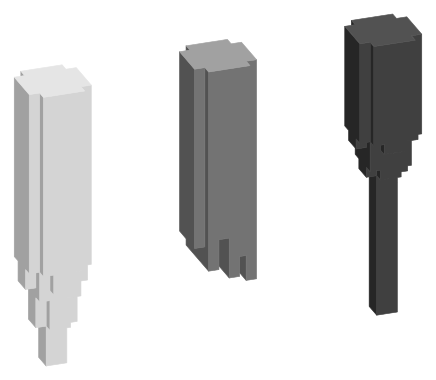
Prusa's tests found PLA works best for a cold pull, at 85 to 100 °C. Bambu Lab adds PETG for high-flow nozzles; Creality favors nylon at 140 to 160 °C.
AnswerTroubleshooting
Pull PLA at 70 to 100 °C after heating to 200 to 270 °C. UltiMaker pulls ABS and cleaning filament at 140 to 160 °C; Creality gives 120 °C for PETG.
AnswerHardware
Consumer heated beds top out at 80 to 120 °C: Bambu A1 mini 80 °C, P1S 100 °C, X1C 110 °C, Ender-3 110 °C, and H2D, Prusa MK4S and CORE One+ 120 °C.
AnswerTroubleshooting
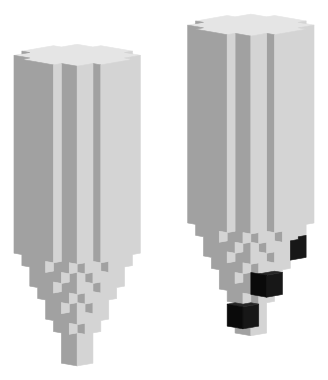
Fill the nozzle at printing temperature, cool it to 70 to 100 °C for PLA or 140 to 160 °C for nylon, then pull up. A good tip is a cone with the nozzle's imprint.
AnswerTroubleshooting
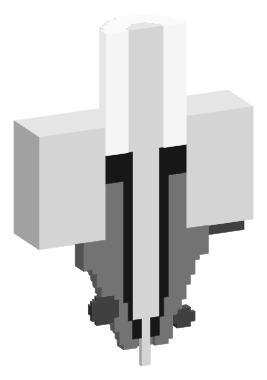
Burnt plastic from filament left in a hot nozzle. Marlin's optional idle timeout cuts the heater after 5 minutes; Prusa brushes the outside at 250 °C.
AnswerMaterials
Bambu Lab sets 80 to 100 °C for its nylons on a glued PEI or Engineering plate, Prusa 110 °C on a PA Nylon sheet. Polymaker's nylons run at 25 to 50 °C.
AnswerMaterials
Yes: Bambu Lab says damp nylon, PC and fiber-filled filament are prone to clogging. Wet PLA mostly bubbles and strings. Dry PLA at 45 to 55 °C for 6 to 8 hours.
AnswerMaterials
Not internal engine parts. Suppliers rate the engine area at 125 °C (257 °F) and on-engine parts at 150 °C, above the HDT of PETG, ABS, ASA and PC filament.
AnswerHardware
A car-part printer needs the material's numbers: 270 °C and an 80 °C bed for PETG trim, an enclosure for ASA, 300 °C and a hardened nozzle for carbon-fiber nylon.
AnswerMaterials
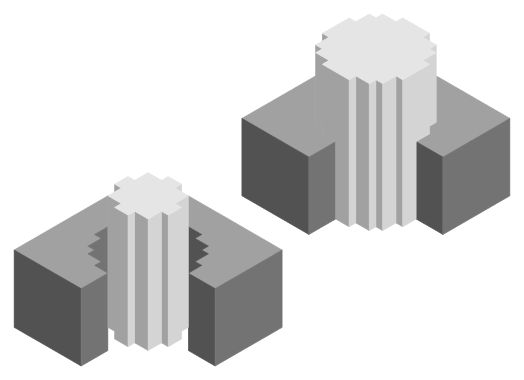
A nylon print holds water with 4 perimeters, but the plastic absorbs it: 2.35% for Bambu Lab PA6-CF vs 0.43% for PLA, and soaked PA6-CF can lose half its strength.
AnswerHardware
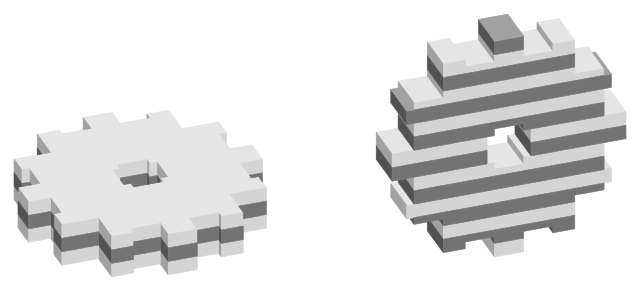
A numbered gear recipe (material, teeth, perimeters, infill, orientation) plus the 2022 Polymers wear test where PETG gears outlasted PLA by 22.3 percent and ABS by 37.
AnswerMaterials
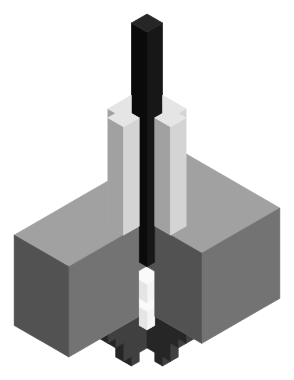
Nylon data sheets put the nozzle at 250 to 300 °C: copolymers start lowest, PA6, PA12 and fiber-filled grades run 260 to 290 °C. Ranges, beds and drying by type.