GuideHardware
Heat-set inserts for 3D prints: sizes, temperatures and installation
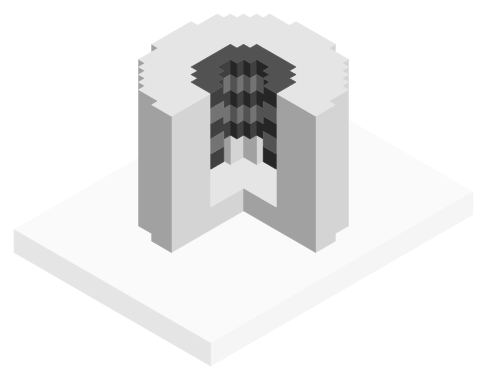
What brass heat-set inserts are, the M2 to M5 size families with hole and wall figures, the iron temperature rule, and the 181 kg M3 pull-out from CNC Kitchen's test.
GuideHardware
What brass heat-set inserts are, the M2 to M5 size families with hole and wall figures, the iron temperature rule, and the 181 kg M3 pull-out from CNC Kitchen's test.
AnswerHardware
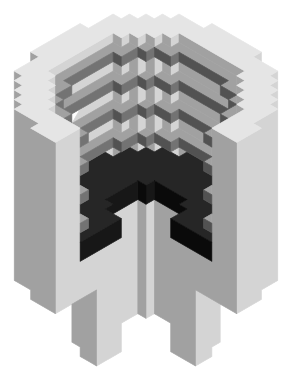
Yes. Copy the 3/4-11.5 NH garden hose thread, not 3/4 in NPT, let a rubber washer seal a flat face, and print PETG or ASA upright with four or more walls.
AnswerHardware
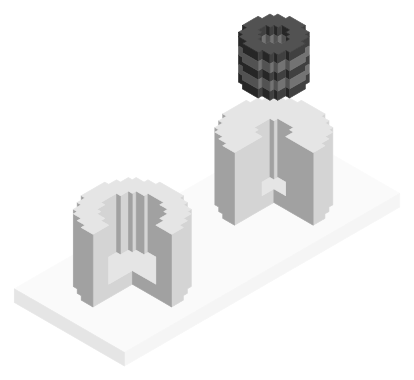
Yes, twice over: the brass thread takes a screw in and out many times, and a pulled insert can be set again in a fresh hole. What to check, and what can't be reused.
AnswerHardware
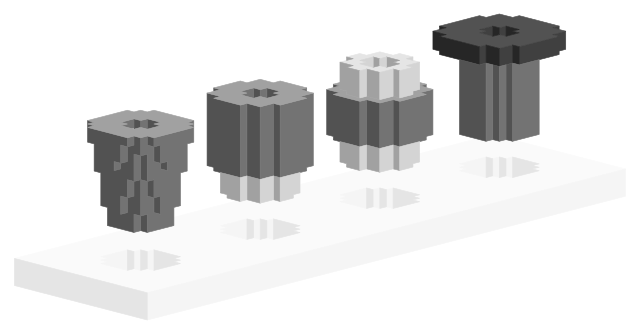
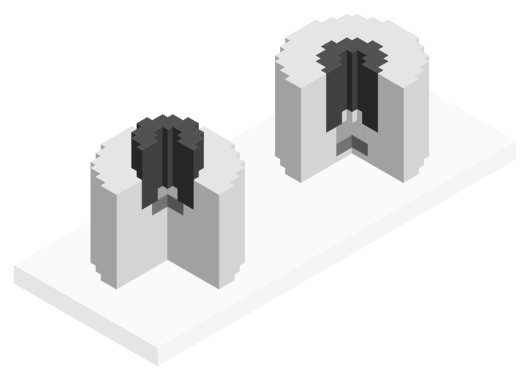
Which end of a heat-set insert goes into the hole first, for tapered, straight-with-pilot, symmetric and flanged inserts, from Ruthex, CNC Kitchen and SPIROL drawings.
AnswerHardware
Insert length and minimum blind-hole depth for M2 to M5 heat-set inserts, standard, short and Voron, from the Ruthex and CNC Kitchen size tables.
AnswerHardware
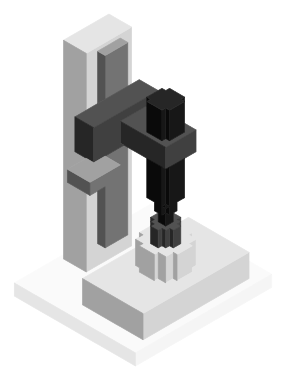
What a heat-set insert press is, the four kinds (printable, kit, drill-press conversion, industrial) with their published specs, and when a hand-held iron is enough.
AnswerHardware
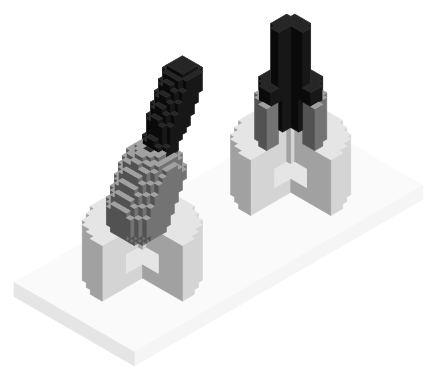
No, a clean ordinary tip works, but insert tips keep inserts square and lift out cleanly. Which tip sets fit which irons, which iron works and how to use one.
AnswerMaterials
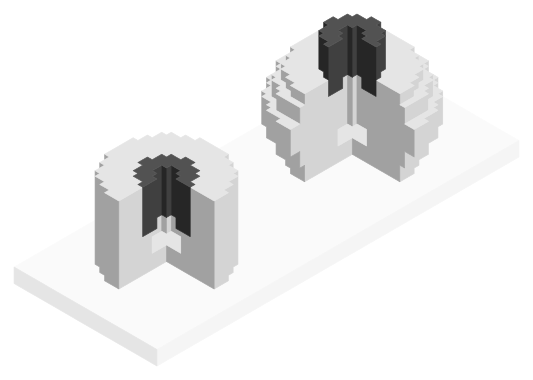
Not reliably: UltiMaker advises against heat-set inserts in flexible TPU because the plastic deforms and the insert loosens. What to use instead, and how to test.
AnswerHardware
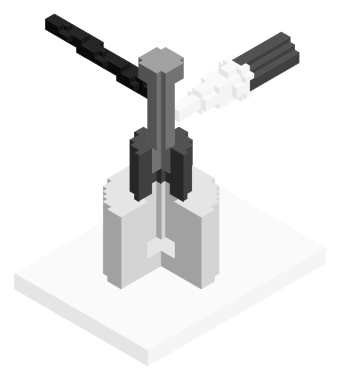
No-iron ways to fit heat-set inserts: a flame-heated screw, a hot plate, presses and cold options, with what controls the temperature and how each one fails.
AnswerHardware
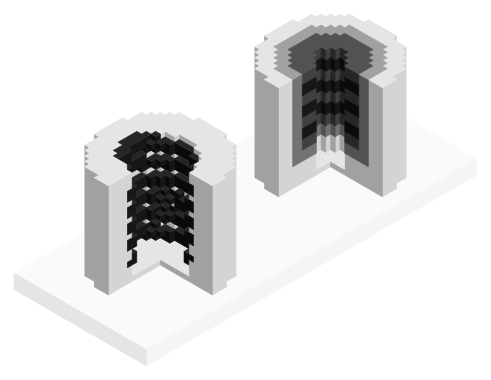
In CNC Kitchen's M3 test in PETG, a Helicoil and a heat-set insert pulled out at the same load, but the Helicoil stripped at 1 Nm against 3 Nm for the insert.
AnswerHardware
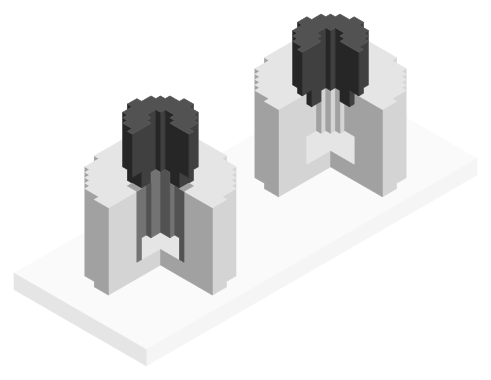
Hole diameter, hole depth and minimum wall for M2 and M2.5 heat-set inserts from the Ruthex and CNC Kitchen size tables, plus how much to oversize the hole in CAD.
AnswerHardware
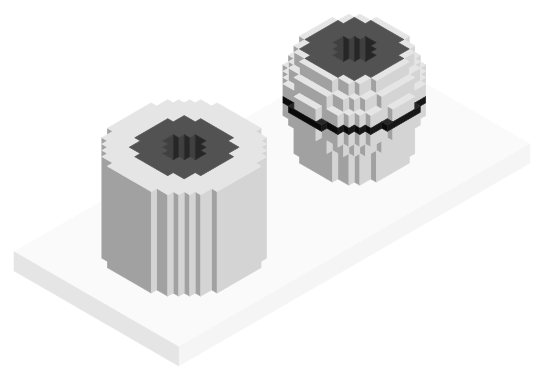
Hole diameter, depth and boss wall for standard and short M4 heat-set inserts: a 5.6 mm hole per Ruthex or 5.7 mm per CNC Kitchen for a 6.3 mm insert.
AnswerHardware
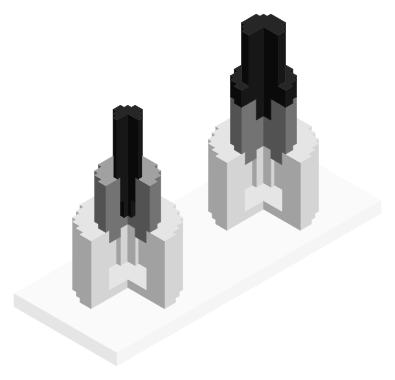
Hole diameter, hole depth and minimum boss wall for standard (M5 x 9.5) and short M5 heat-set inserts, from the Ruthex and CNC Kitchen size tables.
AnswerHardware
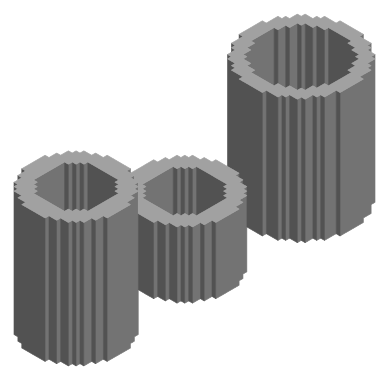
Hole diameter, hole depth and minimum boss wall for M6 (standard and short) and M8 heat-set inserts, from the Ruthex and CNC Kitchen size tables.
AnswerHardware
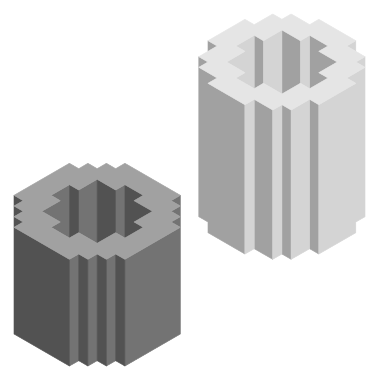
Voron printers use M3 heat-set inserts 5 mm across and 4 mm long (M3x5x4): the hole they need, how many each build takes, and the iron temperature for ABS and ASA.
AnswerHardware
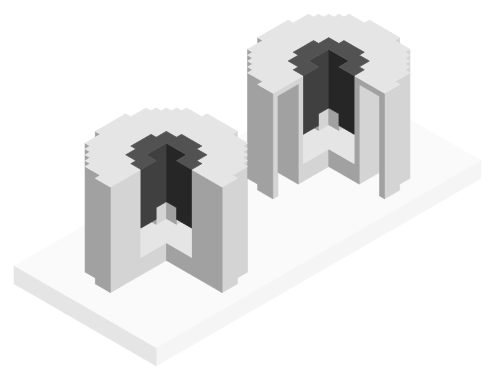
CNC Kitchen's measured pull-out loads for M3 heat-set inserts in PLA: 181 kg for Ruthex, 157 kg for eBay inserts, 39 kg for cheap ones, and how hole size changes it.
AnswerHardware
CNC Kitchen's M3 test in PETG: a bottom-pocket nut held 166 kg against 119 kg for a heat-set insert, but the insert took more torque. When each fastening wins.
AnswerHardware
Yes: brass heat-set inserts hold in PETG at an iron temperature of about 245 °C, and the part stays rigid to a glass transition near 80 °C. Expect stringing from the tip.
AnswerHardware
A soldering-iron procedure for square, flush heat-set inserts: iron 10 to 20 °C above printing temperature, melt about 90 % of the way, finish with a flat tool.
AnswerTroubleshooting
Reheat a tilted insert at 20 °C above printing temperature (240 °C for PLA) and press it flush, or pull it out on a screw in about 10 seconds; drill 5.6 mm for an M4.
AnswerHardware
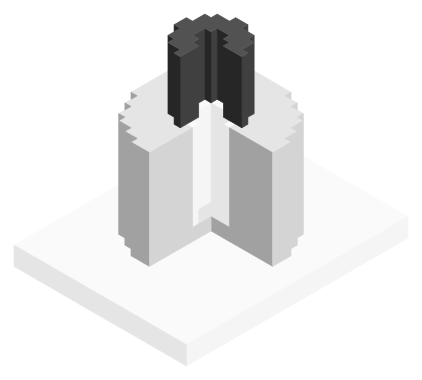
Hole diameter, hole depth and minimum boss wall for standard, short and Voron M3 heat-set inserts, taken from the Ruthex and CNC Kitchen size tables.