AnswerMaterials
Can you use tree supports with TPU?
Yes, but supports printed in TPU tend to string, collapse and stick. Bambu Lab advises PLA supports at a 0 mm top Z gap; for TPU on TPU, Prusa widens it to 0.3 mm.
AnswerMaterials
Yes, but supports printed in TPU tend to string, collapse and stick. Bambu Lab advises PLA supports at a 0 mm top Z gap; for TPU on TPU, Prusa widens it to 0.3 mm.
AnswerMaterials
Start from your slicer's TPU profile: 0.4 mm on Bambu Lab X1 Carbon, P1S and A1, 2.5 mm on Prusa MK4S and CORE One, off on the MK3S, 3 to 8 mm on Bowden printers.
AnswerHardware
Only as a stopgap on a slow shaft. A molded nitrile oil seal is rated to 80 °C and 10 m/s; NinjaFlex TPU deflects at 60 °C. Never print a hydraulic seal.
AnswerMaterials
Not vulcanized rubber, which never melts. Filament printers print rubber-like TPU and TPE in 60A to 95A Shore grades, spanning Parker's 70A to 80A O-ring range.
AnswerHardware
Only the Bambu Lab AMS 2 Pro (up to 65 °C) and AMS HT (up to 85 °C) dry filament. The original AMS and AMS lite don't heat. AMS 2 Pro PETG preset: 65 °C, 12 h.
AnswerMaterials
Yes, on dryers built for it. Bambu Lab's AMS 2 Pro and AMS HT drop to 45 °C with PLA and 55 °C with PETG once a print starts; standalone dryers hold their setting.
AnswerMaterials
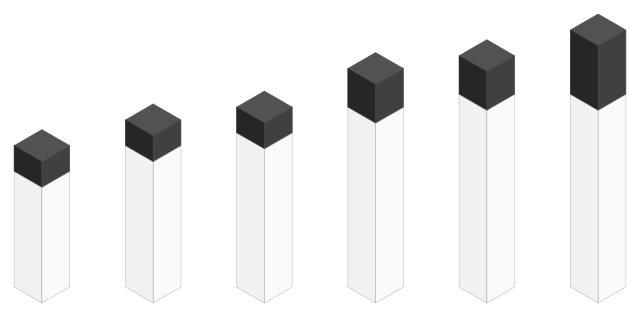
Dry PLA at 45 to 55 °C, PETG at 55 to 65 °C, TPU at 60 to 70 °C and nylon at 75 to 100 °C, for 4 to 12 hours, per Bambu Lab, Prusa and Polymaker.
AnswerMaterials
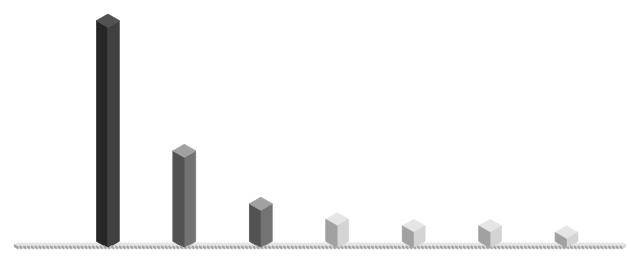
PVA and PA6 nylon absorb the most: 6.25% and 2.35 to 2.56% at saturation on Bambu Lab's data sheets, against 0.43% for PLA and 0.25% for PC.

AnswerMaterials
Dry TPU at 70 °C for 8 hours, per Bambu Lab and Polymaker data sheets. Prusa dries Prusament TPU 95A at 60 °C for 4 hours. Bambu's TPU spools take 90 °C.
AnswerTroubleshooting
Bambu Lab's X1C and P1S guides load PLA at 220 to 230 °C and pull at 70 to 100 °C; the H2D, H2S and P2S run it from Toolbox > Nozzle Cold Pull Maintenance.
AnswerTroubleshooting
TPU is too soft to push old filament out of the nozzle. Bambu Lab says cold pull with PLA or PETG first: flush at 250 °C, pull PLA at 70 to 100 °C.
AnswerMaterials
Bambu Lab's heated-bed drying table sets 60 to 70 °C for PLA, 75 to 85 °C for PETG and 80 to 90 °C for TPU, for 12 hours, spool covered and printer closed.
AnswerTroubleshooting
Clear the jam at 250 °C, cold pull from 220 to 100 °C, then cut the heat: hotend fan always on, door open for PLA on a 45 °C+ bed, retraction 2 mm or less.

AnswerTroubleshooting
Wipe the outside before each print and cold pull the inside about monthly, Bambu Lab's minimum. Prusa's INDX guide says 200 print hours; UltiMaker 100 to 400.
AnswerMaterials
30 to 45 °C covers most TPU. Bambu Lab lists 30 to 35 °C for its 85A, 90A, 95A HF and 68D grades; Polymaker allows 25 to 60 °C and Prusa 60 to 75 °C.
AnswerMaterials
A sunlit dashboard averaged 157 °F (69 °C), so dash parts need ABS, ASA or PC. Shaded cabin parts take PETG, exterior parts ASA, flexible parts TPU.

AnswerHardware
Yes, in TPU for low-pressure, low-heat joints: 95A, 1.5 to 2.5 mm thick, 15 to 25% squeeze. Prusa's printed gaskets all leaked, so pressure needs a stock O-ring.
AnswerMaterials
Not reliably: UltiMaker advises against heat-set inserts in flexible TPU because the plastic deforms and the insert loosens. What to use instead, and how to test.
AnswerMaterials
Yes, if printed well: TPU absorbs 0.18 to 1.08 percent water, and calibrated TPU walls held water 15 days in a 2023 test. Polyester TPU degrades in hot water.
AnswerTroubleshooting
TPU welds itself to a hot bed, a squashed first layer or bare smooth PEI. Bambu Lab lists 35 to 45 °C on PEI plates. The causes, the fixes and a safe way to peel it.