
GuideTroubleshooting
Are 3D prints waterproof? How to make a print watertight
Prints leak by default. Prusa Research's fix: 4 to 6 perimeters, 105 to 110 percent flow, 0.15 mm layers, one vase-mode wall, and epoxy for parts that must stay sealed.
GuideTroubleshooting
Prints leak by default. Prusa Research's fix: 4 to 6 perimeters, 105 to 110 percent flow, 0.15 mm layers, one vase-mode wall, and epoxy for parts that must stay sealed.

AnswerMaterials
No. Data sheets list PLA, PETG, ABS, ASA, nylon and TPU as insoluble in water. Only PVA and BVOH support filaments dissolve, in a few hours to overnight.
AnswerMaterials
Coat it in an epoxy its maker rates safe near reptiles and cure it fully. Bearded dragons bask at up to 42 °C (108 °F) and PLA softens at 57 °C: use PETG or ASA there.
AnswerMaterials
UV printer resin brushed on hardens only where 405 nm light or sunlight lands, and no maker documents it as a sealant. Uncured, it carries H317 (skin allergy).
AnswerMaterials
Yes for seams and joints, not as a coat: silicone sealant is not paintable, goes on at least 1/8 in (3.2 mm) thick and is water ready in 30 minutes to 12 hours.
AnswerHardware
Print the hull with 4 perimeters (2 in ASA), brush epoxy inside and out, grease the stuffing tube, seal the rudder and hatch, then float-test it overnight.

AnswerHardware
Yes, in TPU for low-pressure, low-heat joints: 95A, 1.5 to 2.5 mm thick, 15 to 25% squeeze. Prusa's printed gaskets all leaked, so pressure needs a stock O-ring.
AnswerTroubleshooting
Thin-walled ones do. Prusa's PLA flower pots held water; its tests needed 4 perimeters for PLA and PETG and 5+ bottom layers. Seal the inside or print a saucer.

AnswerTroubleshooting
A vase-mode wall is one line thick, so any gap leaks. Fix: 105 to 110 percent flow, a 0.6 mm outer wall, 5+ bottom layers, or coat the inside or add a liner.
AnswerMaterials
Coat the print in a sealant its maker calls fish safe once cured, such as Pond Armor Pond Shield (24 hours to cure), and use natural PLA or PETG with no added color.
AnswerMaterials
PLA showed no mass or strength loss after a year in 25 °C water in two lab studies. At 50 °C, PLA coupons lost all tensile strength within 57 days.
AnswerMaterials
Yes, if the layers don't crack: ABS held water with 2 perimeters in Prusa's tests, half what PLA needed. Acetone vapor smooths ABS and ASA, but test it for leaks.
AnswerMaterials
PETG is insoluble and takes up 0.45% water at saturation, about the same as PLA. Prints leak at the seams: Prusa needed 4 perimeters before PETG held water.
AnswerMaterials
PLA plastic is: insoluble, 0.43 percent water uptake. A PLA print often leaks at the seam until it has 4 perimeters, more flow, or a coat of epoxy or lacquer.
AnswerMaterials
Yes, if printed well: TPU absorbs 0.18 to 1.08 percent water, and calibrated TPU walls held water 15 days in a 2023 test. Polyester TPU degrades in hot water.
AnswerMaterials
Brush-on epoxy step by step from the XTC-3D data sheet, Prusa's results for epoxy, lacquer, chemical smoothing and nail polish, and the food-contact rules.
AnswerHardware
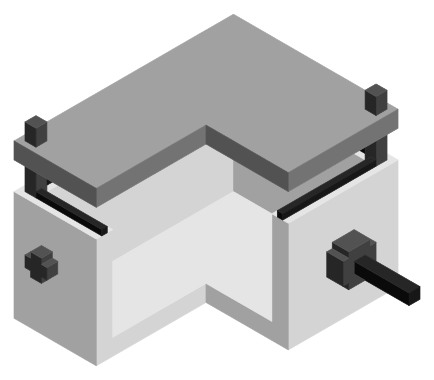
Print ASA or PETG with 2 to 3 mm walls, seal the lid with an O-ring at 20 to 30 percent squeeze under screws, use IP68 cable glands and a vent, then test.
AnswerMaterials
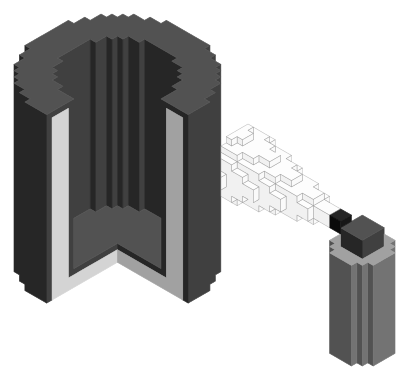
Yes, for parts without water pressure: Prusa sprays acrylic varnish inside and out a few times. Flex Seal needs 24 to 48 hours to cure and is not for drinking water.

AnswerHardware
Published pressure results for printed parts: Prusa Research's 20 and 30 meter dives, a forum test at 5 to 8 bar, and the O-ring rule for threaded fittings.

AnswerTroubleshooting
A fill-and-observe leak test on a dry tissue with two sourced pass points: dry after one night (Prusa Research, closed models) and dry after 48 hours (Bambu Lab, vases).
AnswerTroubleshooting
Four perimeters held water in PLA and PETG in Prusa's tests, two in ABS and PP, and one vase-mode wall in every material. Flow and layer height matter too.