AnswerMaterials
How do you print with PVA soluble supports?
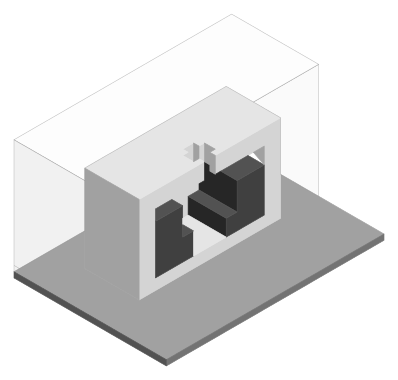
Load dry PVA as a second filament, make it the support filament and set top Z distance to 0. It dissolves in water in a few hours to overnight.
AnswerMaterials
Load dry PVA as a second filament, make it the support filament and set top Z distance to 0. It dissolves in water in a few hours to overnight.
AnswerMaterials
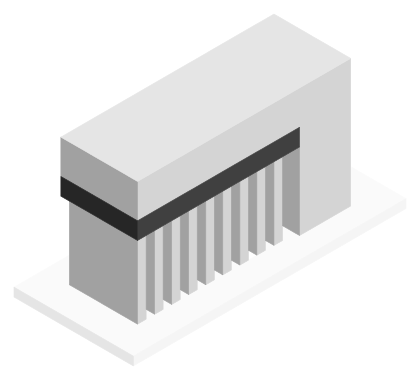
Print only the interface in a material that won't bond: PETG under PLA, PLA under PETG, ABS or ASA under nylon. Makers then allow a 0 mm top Z distance.
AnswerMaterials
Shipped PLA profiles retract 0.4 to 0.8 mm at 30 to 50 mm/s on direct-drive printers and 2.5 to 6.5 mm at 45 to 70 mm/s on Bowden printers.
AnswerTroubleshooting
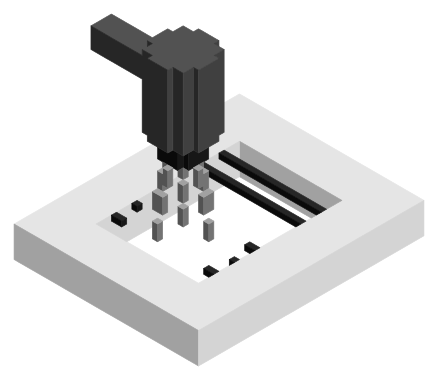
Pull or cut the loose strings, then hit the fine wisps with a heat gun at about 200 °C for one or two seconds. Longer can deform PLA, which softens at 54 to 60 °C.
AnswerMaterials
No. Data sheets list PLA, PETG, ABS, ASA, nylon and TPU as insoluble in water. Only PVA and BVOH support filaments dissolve, in a few hours to overnight.
AnswerMaterials
A closed print with sparse infill usually floats. Solid PLA (1.24 g/cm³), PETG, ABS and nylon sink in water (1.00 g/cm³); polypropylene (0.9 g/cm³) floats.
AnswerMaterials
PLA holds cold water: Prusa's PLA pots showed no leaks and its boxes stayed dry at 20 m. It softens above 60 °C, and Prusa does not recommend prints as food containers.
AnswerMaterials
Brush a cured coat of XTC-3D epoxy over the cavity, then the release agent your casting maker names. Test platinum silicone on a sealed scrap: it can stay tacky.
AnswerMaterials
Coat it in an epoxy its maker rates safe near reptiles and cure it fully. Bearded dragons bask at up to 42 °C (108 °F) and PLA softens at 57 °C: use PETG or ASA there.
AnswerMaterials
UV printer resin brushed on hardens only where 405 nm light or sunlight lands, and no maker documents it as a sealant. Uncured, it carries H317 (skin allergy).
AnswerMaterials
Yes for seams and joints, not as a coat: silicone sealant is not paintable, goes on at least 1/8 in (3.2 mm) thick and is water ready in 30 minutes to 12 hours.
AnswerMaterials
Let the paint dry (72 hours to two weeks for Liquitex acrylics), then brush or spray two or three thin clear coats. Keep to each maker's recoat time.
AnswerMaterials
Run PLA's part cooling fan at 100%, off on the first layer for bed adhesion. Prusament's data sheet says 100%; some printer profiles start at 50 to 85% and ramp up.
AnswerMaterials
Shipped PLA profiles use 0.02 to 0.05 on direct-drive printers with a 0.4 mm nozzle (0.036 on a Prusa Core One) and 0.2 to 0.27 on a Bowden Prusa MINI.
AnswerTroubleshooting
Small layers print in seconds, so the next lands before the last one cools. Set a minimum layer time (4 to 12 s in stock PLA profiles) and keep the fan at max.

AnswerMaterials
Mostly no: at the maker's temperature, no maker names harm from extra hours for PLA or PETG. Heat above it fuses coils; nylon and PC can turn brittle.
AnswerMaterials
Not from a sealed bag. Dry PLA once an opened spool has sat in room air or it pops and strings: Bambu Lab says 55% RH air re-wets filament in 2 to 12 hours.
AnswerHardware
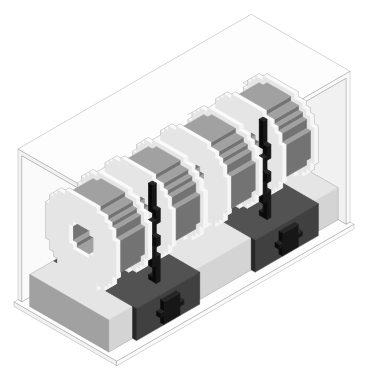
Only the Bambu Lab AMS 2 Pro (up to 65 °C) and AMS HT (up to 85 °C) dry filament. The original AMS and AMS lite don't heat. AMS 2 Pro PETG preset: 65 °C, 12 h.
AnswerMaterials
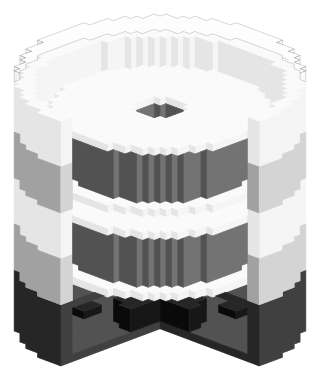
Yes for PLA, PETG and TPU: Nesco, COSORI and Presto dehydrators reach 71 to 74 °C. Not for nylon or PC, which need 75 to 90 °C. Lift the trays out to fit the spool.
AnswerMaterials
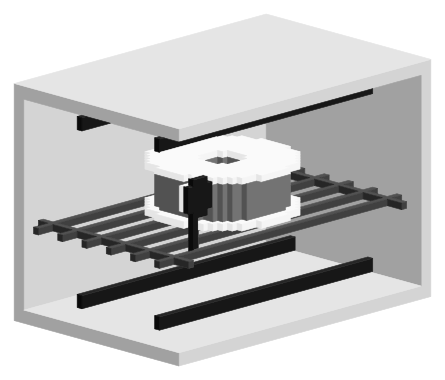
Only if the oven holds the drying temperature. GE's Warm mode bakes at 170 °F (77 °C), past PLA's 60 °C glass transition. Bambu Lab says no; Prusa allows one.
AnswerMaterials
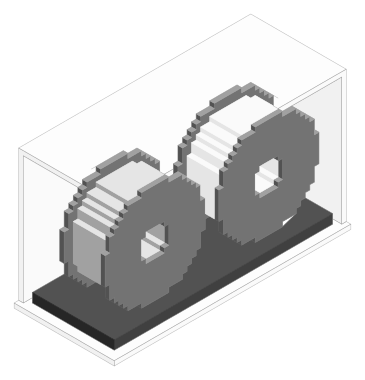
Yes, at the PLA's setting only. Makers dry PLA at 45 to 55 °C and PETG at 55 to 65 °C, so the ranges meet only at 55 °C, Prusa's 6-hour PETG setting.
AnswerMaterials
Dry PLA at 45 to 55 °C, PETG at 55 to 65 °C, TPU at 60 to 70 °C and nylon at 75 to 100 °C, for 4 to 12 hours, per Bambu Lab, Prusa and Polymaker.
AnswerTroubleshooting
Once the spool is dry, stringing comes from settings: Prusa says lower the nozzle 5 to 10 °C, Bambu Lab adds retraction up to 2 mm and shorter travel.
AnswerMaterials
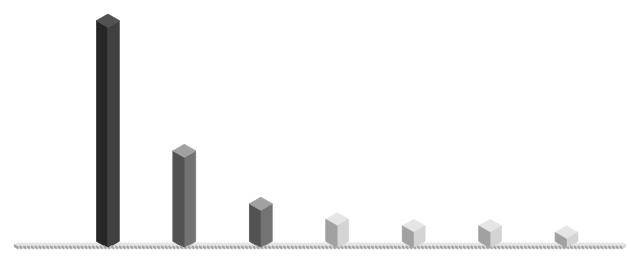
PVA and PA6 nylon absorb the most: 6.25% and 2.35 to 2.56% at saturation on Bambu Lab's data sheets, against 0.43% for PLA and 0.25% for PC.
AnswerMaterials
Heat the spool below its softening point, then seal it with desiccant. Bambu Lab's oven setting is 50 °C for PLA and 60 to 65 °C for PETG, for 8 hours.
AnswerTroubleshooting
Wet filament pops or hisses at the nozzle, bubbles, strings and prints rough. To confirm, dry it (PLA 50 °C, PETG 60 to 65 °C, 8 hours) and reprint.
AnswerMaterials
Dry PLA at 45 to 55 °C (113 to 131 °F) for 6 to 8 hours. Bambu Lab sets 50 °C for 8 hours, Polymaker 55 °C for 6, Prusa 45 °C for 6. Silk and PLA-CF take 55 °C.
AnswerMaterials
Seal it in an airtight bag or box with desiccant below 20% RH, Bambu Lab's target for PLA, PETG, TPU, PC and nylon. Room air can re-wet it in 2 to 12 hours.
AnswerMaterials
Yes: printing from wet filament cost polycarbonate up to 30% of its strength along the lines and 70% across them, ABS 25% and PA6 nylon 43%. PLA held a week at 65% RH.
AnswerTroubleshooting
Bambu Lab's X1C and P1S guides load PLA at 220 to 230 °C and pull at 70 to 100 °C; the H2D, H2S and P2S run it from Toolbox > Nozzle Cold Pull Maintenance.
AnswerTroubleshooting
Yes, up to a point: Prusa adds 5 to 10 °C when a material won't stick, but makers stop near the glass transition, 61 °C for PLA and 81 °C for PETG.
AnswerTroubleshooting
Let it cool: Prusa waits for room temperature and Bambu Lab for 35 °C or lower on textured PEI. On Bambu's SuperTack plate, reheat a stuck print to about 50 °C.
AnswerTroubleshooting
The first layers stay soft and squash out into elephant foot; Polymaker caps PLA at 60 °C. Too hot also clogs nozzles and bonds PETG hard enough to tear PEI.
AnswerTroubleshooting
Yes. In a 2021 ABS test, corner lift was lowest at a 90 °C bed, 0.89 mm, and grew both cooler and hotter: 1.65 mm at 80 °C, 1.37 mm at 100 °C.
AnswerHardware
Bed temperature sits in the filament preset, one row per plate type. Bambu Studio's PLA Basic profile runs 55 °C on Textured PEI on X1 and P1S, 65 °C on the A1.
AnswerTroubleshooting
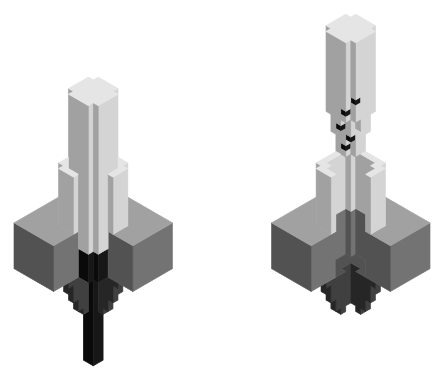
Neither: they do different jobs. Cleaning filament such as eSUN eClean flushes old material at 160 to 300 °C; a cold pull drags debris out at 80 to 160 °C.
AnswerTroubleshooting
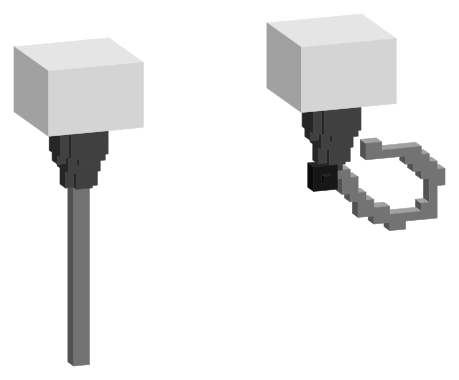
No filament comes out, lines print thin with gaps, the extruder clicks, or a purged strand curls back onto the nozzle. Prusa tests it at 260 °C for PLA.
AnswerTroubleshooting
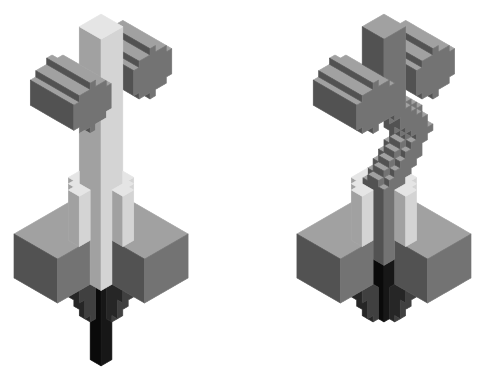
TPU is too soft to push old filament out of the nozzle. Bambu Lab says cold pull with PLA or PETG first: flush at 250 °C, pull PLA at 70 to 100 °C.
AnswerMaterials
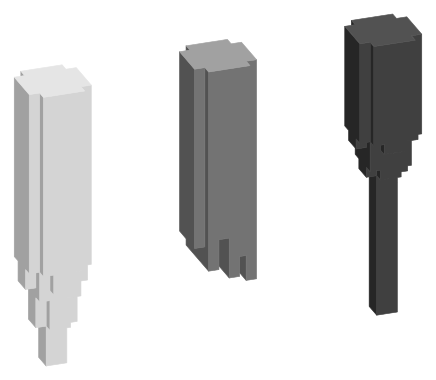
Prusa's tests found PLA works best for a cold pull, at 85 to 100 °C. Bambu Lab adds PETG for high-flow nozzles; Creality favors nylon at 140 to 160 °C.
AnswerTroubleshooting
Pull PLA at 70 to 100 °C after heating to 200 to 270 °C. UltiMaker pulls ABS and cleaning filament at 140 to 160 °C; Creality gives 120 °C for PETG.
AnswerHardware
No. Prusa says PLA does not require a heated bed, and Polymaker and Overture start their bed range at 25 °C. Prusa still recommends a 60 °C bed.
AnswerMaterials
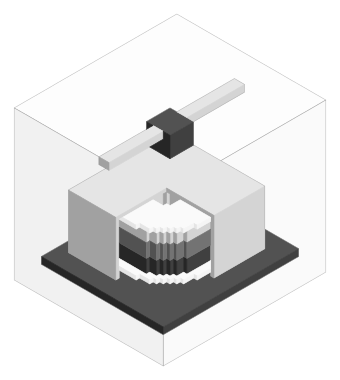
Bambu Lab's heated-bed drying table sets 60 to 70 °C for PLA, 75 to 85 °C for PETG and 80 to 90 °C for TPU, for 12 hours, spool covered and printer closed.
AnswerTroubleshooting
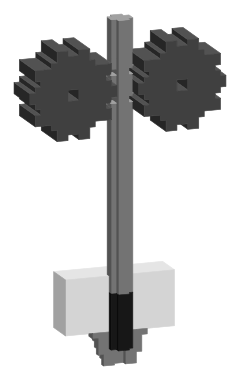
A blockage makes the motor skip steps. Check for a nozzle clog, then first layer height, heat creep, speed (8 to 12 mm³/s on an all-metal hotend) and the gears.
AnswerTroubleshooting
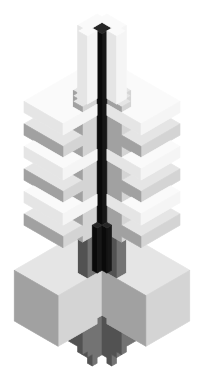
Heat the hotend to 260 °C after PLA or 280 °C after PETG, push a 1.5 mm rigid wire down from the top, or pull the stub up hot with pliers.
AnswerTroubleshooting
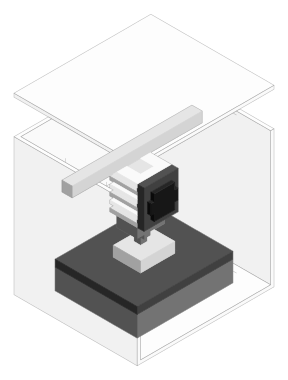
Clear the jam at 250 °C, cold pull from 220 to 100 °C, then cut the heat: hotend fan always on, door open for PLA on a 45 °C+ bed, retraction 2 mm or less.

AnswerTroubleshooting
Wipe the outside before each print and cold pull the inside about monthly, Bambu Lab's minimum. Prusa's INDX guide says 200 print hours; UltiMaker 100 to 400.
AnswerTroubleshooting
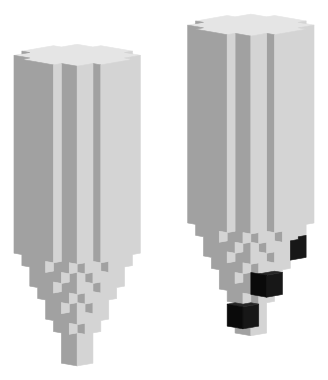
Fill the nozzle at printing temperature, cool it to 70 to 100 °C for PLA or 140 to 160 °C for nylon, then pull up. A good tip is a cone with the nozzle's imprint.
AnswerTroubleshooting
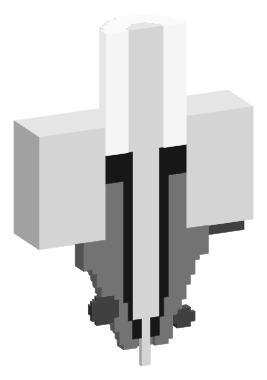
Burnt plastic from filament left in a hot nozzle. Marlin's optional idle timeout cuts the heater after 5 minutes; Prusa brushes the outside at 250 °C.

AnswerTroubleshooting
A 0.3 to 0.35 mm needle, the size Prusa Research bundles, pushed 1 to 2 cm up from below with the nozzle hot. It must be thinner than the 0.4 mm bore.
AnswerTroubleshooting
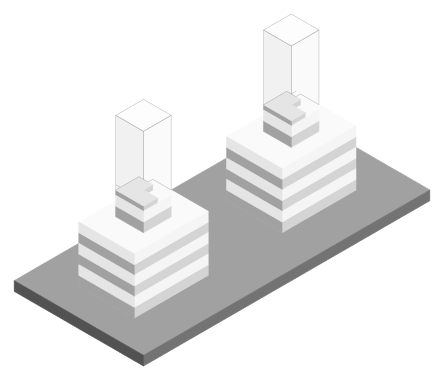
Repeat clogs are usually heat creep: Prusa flags rooms above 35 °C and enclosed PLA. Wet or dirty filament, printing too cold and long retractions cause the rest.
AnswerTroubleshooting
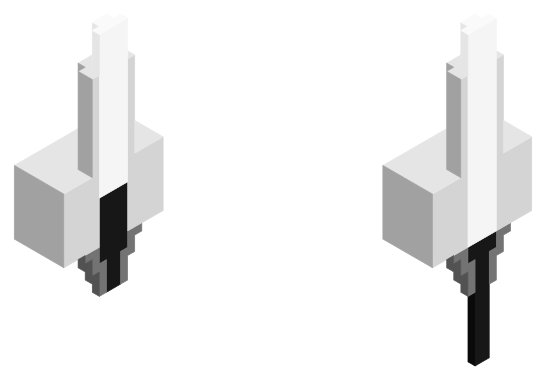
PETG residue stays in the hotend when PLA goes in at 190 to 230 °C. Load the PLA at the PETG temperature, 230 to 260 °C, so it pushes the old plastic out.
AnswerMaterials
Use 55 to 60 °C on smooth or textured PEI and 35 °C on a Bambu Cool Plate. Maker guidance spans 25 to 65 °C across Basic, Matte, Silk, PLA+ and PLA-CF.
AnswerTroubleshooting
Heat the nozzle to 260 °C for PLA or 280 °C for PETG and push filament through, then use a 0.3 to 0.35 mm needle, a cold pull, and finally a nozzle swap.
AnswerTroubleshooting
Bambu Lab's guides heat the nozzle to 250 °C for PLA, run the included pin up and down in the tip, then cold pull. If the clog survives that, swap the hotend.
AnswerMaterials
Yes: Bambu Lab says damp nylon, PC and fiber-filled filament are prone to clogging. Wet PLA mostly bubbles and strings. Dry PLA at 45 to 55 °C for 6 to 8 hours.
AnswerTroubleshooting
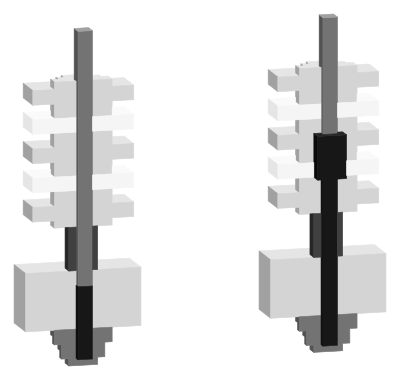
Heat rising into the heatbreak softens filament above the melt zone until it jams. PLA's glass transition is 60 °C; Bambu Lab opens the door over a 45 °C bed.
AnswerHardware
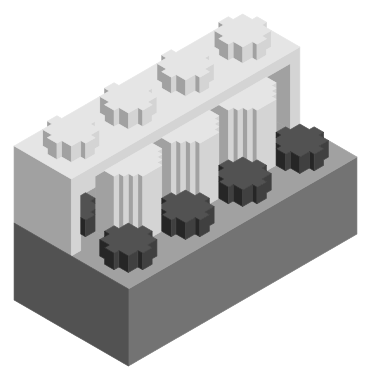
Yes, for personal use. The brick patent expired in 1978, but LEGO molds to 1/200 mm and Prusa quotes 0.3 mm XY, so tune XY compensation on a test brick first.
AnswerMaterials
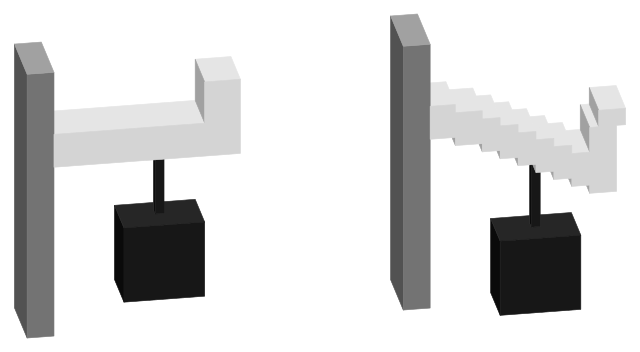
PLA showed no strength loss after a year at 25 °C, but 24 h of lab UV-B cut clear PETG's strength 36% and a hot soak halved carbon-fiber nylon's.
AnswerTroubleshooting
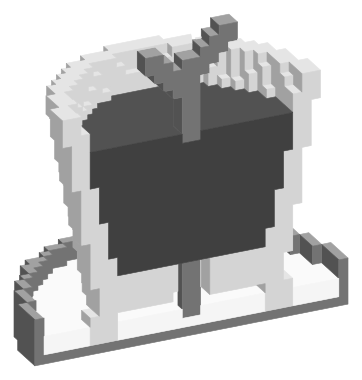
Thin-walled ones do. Prusa's PLA flower pots held water; its tests needed 4 perimeters for PLA and PETG and 5+ bottom layers. Seal the inside or print a saucer.
AnswerMaterials
Coat the print in a sealant its maker calls fish safe once cured, such as Pond Armor Pond Shield (24 hours to cure), and use natural PLA or PETG with no added color.
AnswerMaterials
Iron temperature per material for heat-set inserts: about 225 °C for PLA, 245 °C for PETG and 265 °C for ABS, from CNC Kitchen's printing temperature plus 10 to 20 °C.
AnswerMaterials
PLA showed no mass or strength loss after a year in 25 °C water in two lab studies. At 50 °C, PLA coupons lost all tensile strength within 57 days.
AnswerMaterials
PLA plastic is: insoluble, 0.43 percent water uptake. A PLA print often leaks at the seam until it has 4 perimeters, more flow, or a coat of epoxy or lacquer.
AnswerMaterials
Yes, for parts without water pressure: Prusa sprays acrylic varnish inside and out a few times. Flex Seal needs 24 to 48 hours to cure and is not for drinking water.

AnswerHardware
Published pressure results for printed parts: Prusa Research's 20 and 30 meter dives, a forum test at 5 to 8 bar, and the O-ring rule for threaded fittings.
AnswerHardware
CNC Kitchen's measured pull-out loads for M3 heat-set inserts in PLA: 181 kg for Ruthex, 157 kg for eBay inserts, 39 kg for cheap ones, and how hole size changes it.
AnswerMaterials
Azimi et al. measured ABS emitting hundreds of times more ultrafine particles than PLA, plus styrene. What the studies found and the ventilation they advise.

AnswerMaterials
PLA, PETG, ASA, PP and PC compared for holding water: the perimeter count Prusa needed, data-sheet water absorption, heat limits and outdoor use.